
Concrete Repair in Clarksville, TN
This concrete repair planning guide is from Clarksville Crestwell Concrete. It covers how to describe damage so repair and replacement can be compared fairly.
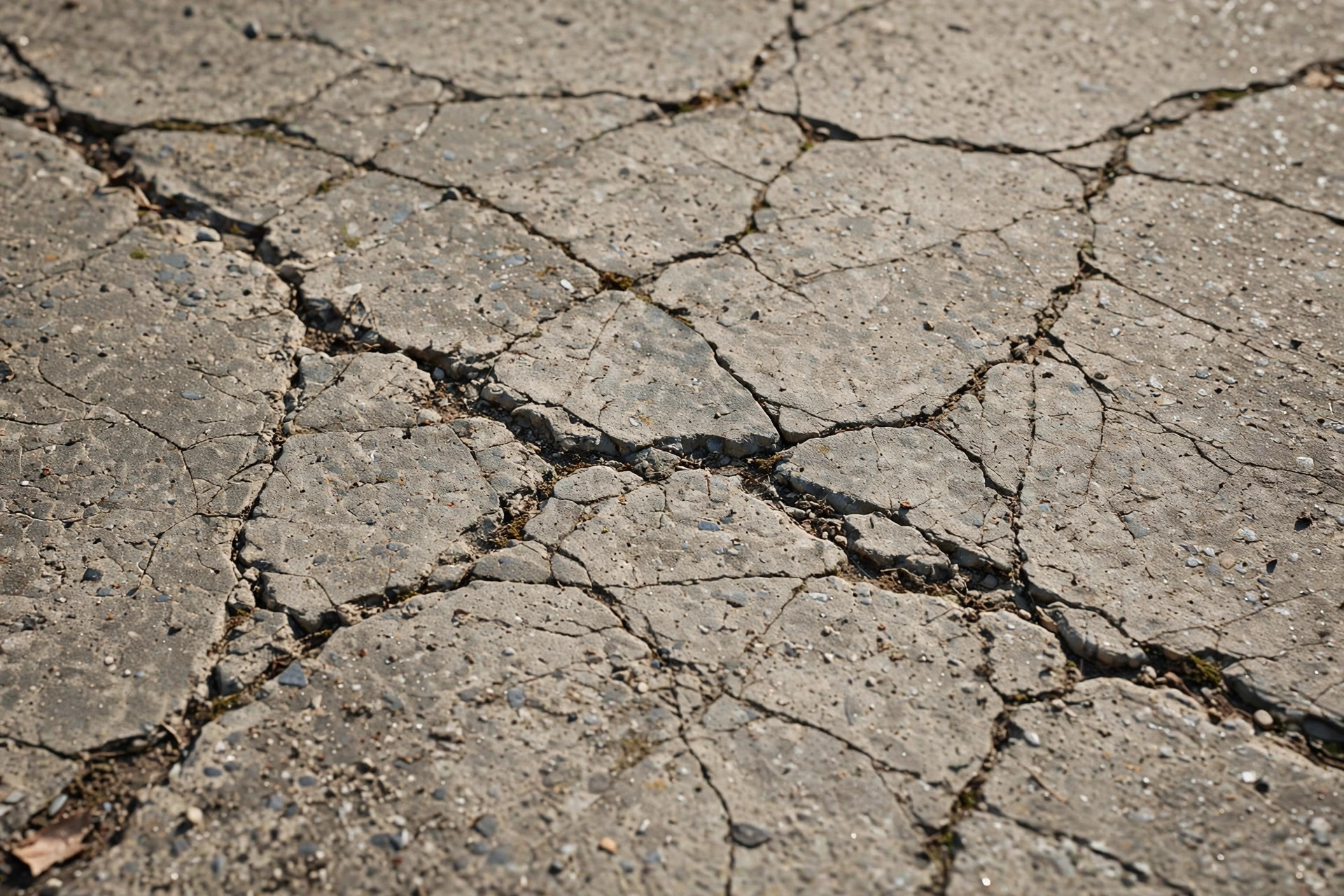
Concrete Problems Worth Evaluating
Not every mark in an aging slab calls for demolition. A shallow chip, a hairline crack, a sunken walkway panel and a driveway with widespread fractures tell different stories. A useful concrete repair conversation begins by describing what has changed, how long the damage has been present and whether water, vehicles or movement may be involved.
Cracks, Surface Spalling and Chipping
Narrow cracks may develop as concrete shrinks, responds to temperature changes or moves under loading. Some are mainly cosmetic. Others deserve closer attention when they widen, show a height difference between sides, admit water or appear alongside settlement. Crack width alone cannot establish whether a slab is structurally sound; location, pattern, movement and use also matter.
Spalling or scaling shows up as flaking, pitting or loss of the top surface. Freeze-thaw exposure, moisture, deicing products, curing and finishing can contribute, but damage should not automatically be attributed to one cause. The NRMCA Concrete in Practice guidance distinguishes cracking from surface scaling and explains why diagnosis matters before choosing a repair.
Uneven or Settled Sections
A panel that has dropped next to a joint or doorway may create an abrupt edge even when much of the concrete remains intact. Soil movement, loss of supporting material, erosion or a change in drainage can contribute. Conversely, a raised edge may reflect heaving rather than a section that simply sank. These conditions are not interchangeable.
Leveling or lifting methods may be appropriate for selected sound, settled slabs, but they need assessment of the support and what caused movement. A patch along the raised edge may disguise a trip point without correcting the panel's elevation. Significant displacement or recurring movement can require a different approach, including replacement.
Standing Water and Drainage Symptoms
Puddles beside a garage, water running toward an entry or consistently wet soil along a slab edge are clues worth recording. Drainage can contribute to surface deterioration or loss of support, and a new patch will not redirect runoff simply by being applied to damaged concrete.
After rainfall, note where water collects and whether downspouts, grading, nearby landscaping or adjoining pavement direct it there. Ask an experienced provider to evaluate the surrounding surface and runoff route before prescribing crack filler, resurfacing or removal. A site-specific solution matters more than assuming one slope or drain works everywhere.
Repair Options Depend on the Cause
Crack sealing, patching, leveling and resurfacing solve different problems. The repair material and preparation should fit the existing concrete and its exposure, not just the appearance of the damage. A responsible recommendation explains both what the treatment can improve and what underlying conditions it cannot correct.
Localized Crack Sealing and Patching
For an isolated, stable crack or localized chip, a qualified installer may consider compatible sealants, fillers or repair mortars after evaluating the surface. The selection depends on crack movement, depth, moisture, whether vehicles will cross the area and the material manufacturer's requirements. Filling a crack does not necessarily restore a slab's original structural capacity.
Loose, unsound material and contamination can prevent a patch from bonding well. Proper preparation may involve removing weak concrete and cleaning the repair area; some systems require a specific profile or curing method. If the crack remains active or water continually enters beneath the slab, sealing the visible opening alone may be a limited or temporary measure.
Surface Restoration Versus Full-Depth Repair
Resurfacing places an overlay or thin repair system over existing sound concrete and can improve worn appearance, shallow pitting or some superficial cracks. It is not a universal fix for severe settlement, heaving, large moving cracks or a failing base. The underlying slab needs to be stable and prepared to match the selected repair product.
Full-depth repair involves removing and rebuilding a more substantial portion of concrete when damage or loss of integrity extends below the surface. Even then, a provider needs to investigate why the old section failed. Concrete Network's outdoor restoration guidance makes the same distinction between cosmetic surfacing and deeper movement problems.
When Replacement May Be the Better Choice
Repair can preserve usable concrete, but repeated patching is not always the best long-term decision. Replacement deserves consideration when damage is widespread, the surface cannot safely serve its purpose, or the supporting ground continues to change. A qualified on-site assessment should explain the tradeoffs rather than promise that every existing slab can be rescued.
Large Movement or Widespread Deterioration
Multiple displaced sections, major fractures, deep delamination or large areas of crumbling concrete may limit the value of localized work. If adjoining portions move independently, a seamless overlay can crack over the same problem. Some failed panels are better evaluated for selective removal and replacement instead of applying another surface treatment.
The intended use matters too. An uneven walkway can create a pedestrian hazard; a driveway panel supporting daily vehicle traffic has different loads from a backyard seating area. Ask the provider to clarify which portions remain sound, which are suspect and whether repairing selected sections creates awkward or unsafe transitions.
Problems in the Base Below the Slab
Concrete depends on stable support beneath it. Erosion, poorly compacted fill, repeated saturation or other subsurface changes can allow a slab to settle or fracture. Treating only the visible crack may leave the cause untouched, so future movement is still possible.
Where the slab can be saved, a qualified provider might discuss a lifting or support-correction method with suitable limitations. Other conditions may call for excavation, base reconstruction and replacement. Neither approach should be selected from photographs alone when the amount of movement, soil condition or structural support is uncertain. The NRMCA explanation of concrete cracking highlights subgrade preparation, joints and drainage as relevant factors.
Repairing Driveways, Walkways and Patios
A treatment that works for a sheltered patio may not be the right one for a vehicle driveway or a regularly used pedestrian route. Think about traffic, drainage, surface texture, edges and the visual result, then describe those priorities to the person evaluating the slab.
Different Loads and Walking Hazards
Driveway patches may face vehicle loads, tire turning and road-related contaminants. A walkway needs comfortable transitions and appropriate traction; a small change in panel height can matter more here than on a decorative patio. Patios near doors may also need careful drainage and threshold details.
Ask whether the proposed method suits the specific load and exposure, whether an existing trip point remains afterward, and when the surface can be used again. A contractor should confirm applicable accessibility or public-right-of-way requirements for affected sidewalks rather than assuming that every private path has identical rules.
Matching Old and New Concrete Appearance
A fresh patch often differs from the existing slab because older concrete has weathered and may use a different mix, aggregate, pigment or texture. Even careful finishing cannot guarantee an invisible repair. Colored or stamped concrete can be especially difficult to blend where the original finish has faded unevenly.
If appearance matters, ask for an example or a realistic test area and discuss whether a larger resurfacing treatment would create a more consistent look. That is a design choice, not a substitute for checking slab soundness. Avoid paying for a color match that is promised as exact without a sample or a clear description of likely variation.
What Affects a Concrete Repair Estimate?
A fair comparison of repair proposals starts with an accurate description of damage and scope. The visible square footage is only one consideration: diagnosis, preparation, material selection, site access, traffic needs and whether the base is stable can all affect the work. No national price band is a verified Clarksville estimate.
Extent, Access and Repair Method
An isolated chipped corner differs from a large area of scaling that needs removal of weak material. Crack sealing, patching, slab lifting, thin resurfacing, selective replacement and demolition involve different equipment, preparation and follow-up care. It matters whether the provider is pricing only a cosmetic treatment or a correction to settlement or drainage.
Confirm the location of underground utilities before excavation or slab removal that disturbs the ground. Tennessee 811 explains how to request utility marking, while some privately owned lines may need separate locating. Project access, traffic control and hauling debris can also affect the quote.
What Photos and Measurements Help
Useful documentation includes wide views of the full driveway, walkway or patio plus close-ups of cracks, loose surface areas and displaced joints. Include a ruler or another clear scale for comparison, approximate panel sizes, how high adjoining sections differ, and photos taken after rain if water pools nearby.
Describe when you first noticed the damage, whether it is getting worse, past repairs and whether heavy vehicles or equipment regularly use the surface. Ask an independent provider for a written scope explaining why the chosen method suits the slab, what conditions might change the price and which parts are excluded. A photo-based estimate is not a substitute for evaluating significant movement.
Describe Your Concrete Repair Project
Before discussing repair options with a qualified independent provider, gather the location of the damage, approximate affected area, whether it is a driveway, patio or pedestrian route, photos, visible elevation changes and any drainage concerns. Note if the cracks are growing, the surface has previously been patched or there is a structure nearby that could be affected.
Some repair work can involve a structure, excavation, public sidewalk or right-of-way. Permit responsibilities depend on the actual scope and jurisdiction; consult Clarksville Building & Codes for locations inside city limits or Montgomery County Building & Codes for relevant county-jurisdiction properties. Do not assume every patch needs a permit, or that all repair work is exempt.
Clarksville Crestwell Concrete provides project-planning information. Use this information and the homepage planning checklist to prepare the questions you would ask a qualified local provider.
Concrete Repair Questions
Can Every Crack Be Repaired?
Not every crack is suitable for a simple patch. A narrow surface crack may allow localized repair, but widening cracks, settlement, recurring movement and drainage problems can signal an underlying issue. The right approach starts with understanding why the crack occurred and whether the concrete remains stable.
Is Concrete Leveling the Same as Patching?
No. Patching fills or restores localized damaged material, while leveling aims to correct a slab section that has dropped or moved, using a method suitable for its condition. A visibly uneven surface should be assessed for soil loss, movement or drainage problems before selecting either method.
Will a New Concrete Patch Exactly Match the Existing Slab?
An exact match is difficult because the old concrete has weathered and may differ in mix, aggregate, finish and moisture exposure. Contractors may blend texture, use compatible coloring or treat a wider surface, but results vary and should be demonstrated with a sample where appearance matters.
Does Surface Spalling Always Mean the Whole Slab Needs Replacement?
No. Shallow flaking or pitting may be treatable with surface preparation and repair if the underlying concrete is sound. Deep deterioration, substantial cracking or continued movement may call for more extensive repair or replacement. The distinction requires an on-site condition assessment.