
Stamped Concrete Options in Clarksville, TN
This stamped concrete planning guide is from Clarksville Crestwell Concrete. It covers where stamped finishes fit and what to decide before choosing a pattern.
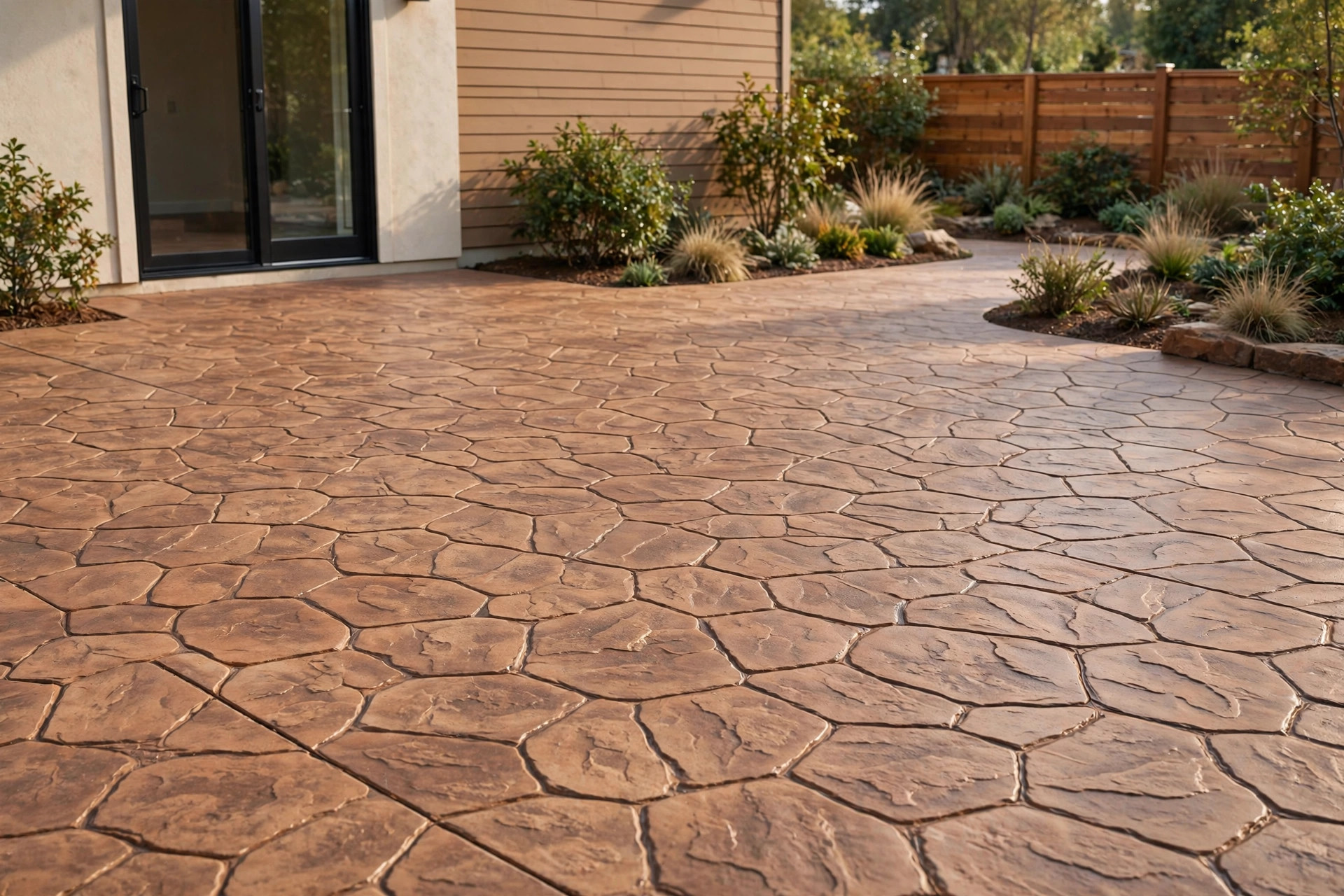
Where Stamped Concrete Can Be Used
Stamped concrete is a decorative finish made by pressing a texture or pattern into concrete while it is still workable. Patterns can resemble slate, brick, cobblestone or other materials without using individual stone units. The design still has to fit the surface's purpose: people walking, chairs moving, vehicle traffic and exposure to rain call for different planning decisions.
Stamped Concrete Patios
A stamped patio can tie a backyard sitting area to the style of the home. Large slate-like patterns may create a broad, calm look, while brick or stone impressions can emphasize borders and smaller gathering spaces. Before choosing a stamp, work out the patio footprint, door thresholds, furniture clearances and where people will walk.
Pattern scale matters in a tight space, and decorative edges can make an otherwise simple layout more labor-intensive. Discuss where contraction joints will appear, how the chosen relief feels under bare feet or patio furniture, and where water will drain after a storm. A color or texture sample is more useful than relying on a small photograph.
Decorative Driveways and Walkways
Stamped finishes may be considered for driveway approaches, entries and walking paths where a homeowner wants a more distinctive surface. The decorative layer does not replace the need to plan suitable pavement support, vehicle loads, surface slope, joints and safe transitions. A driveway design must first function as a driveway.
Walkways deserve special attention to wet traction and changes in elevation. Deeply patterned surfaces can be uncomfortable for wheels or furniture, and shiny sealers can become slick. Near a public sidewalk or right-of-way, verify ownership, applicable approval requirements and accessibility obligations before selecting decorative details.
Popular Pattern and Color Decisions
The same concrete surface can look very different depending on the combination of pattern, scale, base tone and accent color. Choose those elements together rather than selecting a stamp shape in isolation. Sunlight, surrounding brick or siding, landscaping and existing pavement can all affect the final appearance.
Stone, Slate and Brick-Look Patterns
Ashlar-style slate, irregular stone, cobblestone and brick-inspired designs create different rhythms across a patio or entry. Broad patterns may suit larger open areas; smaller repeat patterns can accent a narrow path or edge. Consider the direction of the impression, the width of any simulated joints and whether a decorative border will make the layout feel crowded.
An imprint resembles natural material but does not behave exactly like individual stone or brick. Concrete still needs appropriately designed real joints, and color variation is expected. Ask to see representative examples in outdoor light and understand that a finished concrete slab cannot be rearranged piece by piece later.
Integral Color and Surface-Applied Color
Integral pigments are mixed through the fresh concrete, creating a base color throughout the placed material. Other coloring methods, such as surface-applied color hardeners or antiquing release products, help produce contrast and highlight patterns. Different systems may be combined, but they are not interchangeable in application or maintenance.
Surface color can wear or change with sunlight, cleaning, sealer performance and traffic. Integral pigment does not eliminate variation caused by finishing and curing. Ask a qualified decorative installer which products they recommend, what appearance changes are normal, and how a future repair would be blended with the surrounding color.
Stamped Concrete Versus Other Surfaces
A stamped slab is one design option, not automatically the best choice for every property. Compare how the surface will be used, the appearance you want, possible repairs, drainage, total installed scope and ongoing care. The right choice may be a simpler finished slab or a system made from individual paving units.
Stamped Concrete Versus Broom-Finished Concrete
Broom-finished concrete is often selected for straightforward exterior walking or vehicle surfaces where a practical texture matters more than a decorative stone-like pattern. Stamped concrete adds imprinting, possible color treatments and often a protective sealer. Those extra steps can affect scheduling, material choices, future maintenance and cost.
A stamped finish can offer a distinctive appearance, but it is not automatically stronger or more slip resistant than a well-designed broom-finished slab. Beneath the decorative treatment, concrete still depends on sound subgrade, appropriate mix and joint design, curing and drainage. Ask for a comparison that includes those basics, not just the price of the finish.
Stamped Concrete Versus Individual Pavers
A stamped concrete patio is generally constructed as a continuous slab with control or isolation joints; pavers are individual units laid in a designed system. Pavers can sometimes be lifted and reset individually when utilities or settlement create problems. A stamped surface normally requires patching, resurfacing or replacing a larger concrete area if the underlying slab fails.
Both systems require careful preparation, drainage and ongoing care. Paver joints may need maintenance, while sealed decorative concrete may need resealing and color touch-ups. Ask each provider to clarify the full base, edge, drainage and maintenance scope before assuming one option always costs less or lasts longer.
Texture, Sealing and Maintenance
Decorative finish choices carry responsibilities after installation. Dirt, leaves, standing water, sunlight, foot or vehicle traffic and cleaners can change the appearance of colored surfaces and wear a sealer. Set realistic expectations about cleaning, slip risk and product compatibility before choosing a gloss level.
Surface Traction in Wet Weather
Texture, slope, moisture and the type and thickness of sealer all influence grip. A glossy film-forming sealer may deepen the color but can make some surfaces more slippery when wet, particularly where a stamp creates smooth raised areas. Ask the installer about a suitable texture, a less glossy compatible finish and whether traction additives can be used with that system.
Do not describe any stamped surface as skid-proof or presume it meets accessibility standards. Paths used by older visitors, children or people using mobility aids may need particular attention to relief depth and surface transitions. If a route is legally required to be accessible, consult the governing standards and a qualified designer rather than treating the decorative pattern as a compliance solution.
Sealing and Color Upkeep
Many stamped concrete installations use a sealer to help protect against moisture, staining, sunlight and normal wear. Maintenance depends on exposure, traffic, the sealer chemistry and the manufacturer's instructions. Some product systems need periodic resealing, but there is no reliable universal interval or guarantee for every Clarksville driveway or patio.
Inspect for dull areas, changes in water absorption, wear along busy paths or whitening and peeling of old coatings. Clean gently with products compatible with the surface and discuss compatibility before applying a different sealer over an existing one. In Tennessee's exterior climate, freeze-thaw exposure and standing moisture make appropriate material selection, drainage and curing worth discussing. See the Tennessee Concrete Association's outdoor concrete care guidance.
Planning a Stamped Concrete Project
Decorative work should begin with a site assessment and a clear expectation of the result. A completely new stamped patio and an overlay placed over older concrete involve different materials, preparation and risks. Before comparing design samples, determine which construction method the surface actually supports.
Is the Existing Surface Suitable for an Overlay?
Traditional stamping takes place while fresh concrete can still accept an imprint; an older hardened slab cannot simply be stamped again. Some existing patios or walkways may accept a purpose-made stampable overlay. The underlying slab must be sufficiently sound, and its condition, surface profile, coatings, moisture and existing cracks affect whether a new layer will bond and perform.
Large moving cracks, settlement, heaving, extensive spalling or unstable support can make an overlay unsuitable. Covering visible damage does not stop the underlying movement and may cause the new surface to crack or debond. Ask a qualified contractor to explain why resurfacing is appropriate, or why removal and replacement would be safer, before choosing a pattern.
What Changes the Installation Scope and Price?
Dimensions are only the starting point. New installations may involve removal, grading, base preparation, joints, steps or special drainage. Decorative costs also reflect the number of patterns and colors, border details, stamping labor, access restrictions, finish complexity, cleanup and sealer choice.
For an overlay, cleaning, removing coatings, crack evaluation, surface profiling, bonding requirements and the product system can matter as much as the decorative finish itself. Compare written proposals for what they include and exclude. Advertised prices from national cost guides are not verified Clarksville bids, and a site-specific provider should confirm actual scope before giving a firm price.
Prepare Your Decorative Concrete Project Description
Before speaking with a qualified independent provider, write down the surface type, approximate dimensions, current condition, desired pattern and color, and how the area will be used. Include whether it is a new installation or an existing slab you hope to resurface. Photographs of cracks, drainage areas, thresholds and access paths help explain the situation.
Ask the installer to identify the proposed concrete or overlay system, base or preparation work, joint layout, treatment for wet traction, sealer type, curing and maintenance instructions, and what happens if an existing surface moves. If ground disturbance is involved, Tennessee 811 explains excavation-notice responsibilities. Permit or right-of-way questions should be checked with the relevant local authority, rather than assuming the same rule applies to every driveway, patio or walkway.
Clarksville Crestwell Concrete provides project-planning information. Use this information and the homepage planning checklist to prepare meaningful questions.
Stamped Concrete Questions
Can an Existing Patio Be Stamped?
Traditional stamped concrete is textured while fresh concrete is workable. An existing patio may instead receive a specially designed stampable overlay if its surface and underlying slab are suitable. Major settlement, deep deterioration or unstable cracks can make an overlay a poor choice; an experienced installer needs to assess condition first.
Does Stamped Concrete Need Resealing?
Many stamped-concrete finishes use a protective sealer that wears with sun, weather and traffic. Inspection and resealing may be needed periodically; an often-cited range is about two to five years, not a fixed schedule. Sealer compatibility, surface condition and the manufacturer’s directions should determine when and how it is reapplied.
Is Stamped Concrete Slippery When Wet?
Texture, polish, the sealer selected, and moisture all affect traction. Some sealed decorative surfaces can be slick when wet, so ask about surface texture, suitable traction-enhancing additives and the intended use of the patio or walkway. No surface should be described as slip-proof.
How Is Stamped Concrete Different From Stained Concrete?
Stamping creates a patterned texture, often to resemble stone, brick or another material. Staining changes the surface color and does not create the same relief pattern. A project can combine coloring and stamping, but the condition of the concrete and the desired finish determine which methods make sense.