
Should You Repair or Replace Concrete? A Project Planning Guide
This guide to deciding between concrete repair and replacement is from Clarksville Crestwell Concrete. It helps Clarksville property owners compare repair and replacement before seeking an assessment.
First Identify the Type of Concrete Damage
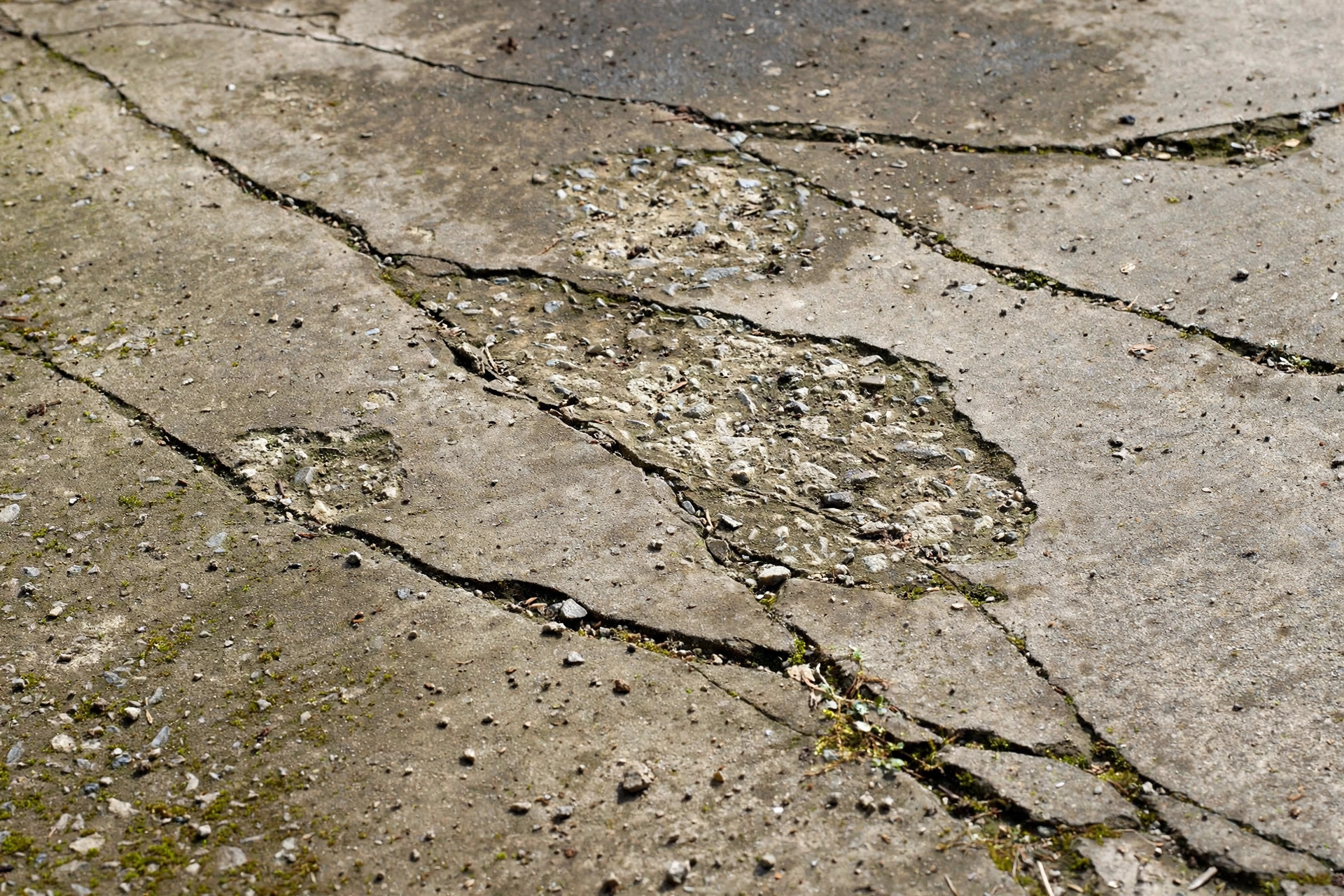
Concrete damage is not one diagnosis. A worn top layer, a hairline crack, a displaced driveway panel and a slab that repeatedly collects water may need entirely different responses. Before looking at repair products or replacement prices, describe what you can see, how the problem has changed and what the concrete is expected to support.
Small Cracks, Flaking and Surface Wear
Fine cracks and limited surface flaking are worth documenting, but they do not automatically mean a whole patio or driveway has failed. Concrete can crack as it shrinks or responds to temperature, restraint, load and support conditions. Light scaling may affect appearance more than function when the underlying material is still sound. The Tennessee Concrete Association's NRMCA technical sheet library discusses cracking and scaling separately.
Look for loose pieces, widening gaps, water entering a crack, or changes in the edge height. A small stable patch can sometimes be considered, but damage that keeps growing deserves closer examination. Do not treat a photograph or a single crack-width threshold as proof that the slab is either safe or beyond repair.
Uneven Sections, Widespread Cracking and Water Problems
Uneven concrete can result from settlement, erosion of supporting soil or upward movement; the visible step does not identify which cause is responsible. Water that pools at a garage door or along a foundation may be a symptom of grade or drainage problems. Multiple broken panels or cracks with different elevations can signal more extensive movement.
Map where the problems occur. Are they concentrated near a downspout, driveway edge or utility trench? Does the surface move seasonally or continue to drop? Photograph the area after rain if it is safe to do so. These observations give a qualified provider a useful starting point, not a remote structural diagnosis.
Situations Where Repair May Be Appropriate
Repair may be reasonable when the damage is limited, the existing slab is fundamentally sound and the cause can be managed. Different methods have different goals: seal an opening, restore a localized damaged area, improve an intact surface, or correct the elevation of a selected panel. The method should follow an assessment of the concrete and its support.
Localized Surface Repairs
A narrow stable crack, chipped edge or localized scaling may be a candidate for compatible crack sealing or patching. Surface preparation, moisture, product choice and intended loads matter. An outdoor driveway repair may need different durability characteristics from a protected patio. A sealant can reduce entry of debris or water in appropriate cases, but it does not automatically restore the slab's original structural capacity.
Ask whether the repair area needs removal of loose material, a specific surface profile or a curing method. If the crack is still moving or the underlying soil remains unstable, filling the visible gap may only cover the symptom. A qualified provider should explain that limitation before recommending the least disruptive-looking option.
Surface Resurfacing Where the Slab Is Suitable
Resurfacing can renew the texture or appearance of concrete with shallow wear when it is sufficiently stable to receive a bonded overlay. Contractors may use purpose-made cementitious systems for suitable conditions, but careful preparation and compatibility with the existing slab are essential.
Do not confuse a new overlay with replacement of weakened support. Major displacement, extensive deep cracking, heaving or a deteriorating base can cause an overlay to crack or separate. Concrete Network's outdoor restoration overview distinguishes suitable surface renewal from cases needing more serious investigation. Treat resurfacing as a potential finish solution, not a way to hide a failing structure.
Signs Replacement May Deserve Consideration
Replacement becomes more plausible when the existing concrete cannot perform its job safely or economically, or when repairing the top surface would leave a serious problem underneath. This is a project-level decision, not a rule based only on the age of the slab, the number of cracks or an internet pricing chart.
Recurring Settlement or Poor Support
A section that repeatedly sinks after being patched or lifted may need further investigation into runoff, erosion, unsuitable fill or changing ground conditions. In some circumstances, a sound slab can be lifted and supported without full removal. In others, the existing panel may be fractured, unsuitable for lifting, or part of a larger support problem that requires rebuilding the base.
Ask what evidence supports saving the old concrete and what the method would do about the cause of movement. If a provider recommends removing only one panel, confirm how the new section will join adjacent pavement and whether water will continue flowing beneath it. Neither lifting nor replacement should be presented as a universal guarantee against future settlement.
Extensive Damage or Failed Drainage
Large areas of deep spalling, interconnected fractures, significant displacement or delamination can limit the value of repeated cosmetic work. When a driveway or walkway no longer provides a reasonably safe, functional surface, a broader rebuild may merit comparison with repeated spot repairs.
Replacement alone is not a drainage solution. Before pouring new concrete, a provider should investigate finished elevations, downspouts, nearby ground, support conditions and the way water leaves the property. The NRMCA Concrete in Practice series covers cracking, scaling, joints and related quality factors that can inform those discussions without serving as a site-specific design.
Comparing Repair and Replacement Scope
Comparing options means comparing the work performed, not simply two bottom-line prices. Repair may preserve sound concrete and reduce the area disturbed. Replacement may allow support, grade and joint layout to be redesigned, but demolition, haul-off and a new curing period change the project. Both methods have limitations worth including in a written proposal.
Appearance, Disruption and Ongoing Maintenance
A small patch may be faster to accomplish but can remain visible because older concrete has weathered. Resurfacing may make a larger area look more uniform, yet any coating or overlay can require suitable cleaning and future care. Replacement may create a new finish, though adjoining older panels can still look different and new concrete can also crack.
Think about how long access to a garage, walkway or patio could be restricted, where demolition debris would go, and which household activities must continue during the work. Ask about project-specific curing and return-to-use instructions rather than assuming one standard wait. If mobility access is affected, discuss temporary pedestrian routes as well.
What Drives Cost for Each Option
Repair cost can depend on diagnosis, preparation, extent of damage, leveling method, surface restoration products, finish matching and access. Replacement adds possible demolition, disposal, excavation, subgrade correction, new forms and concrete, joints, drainage work and inspections where applicable.
A very low resurfacing price is not a meaningful substitute for a replacement quote if the original slab is unstable. Conversely, quoting full replacement without explaining why the existing concrete cannot be saved leaves an important decision unanswered. Request comparable descriptions of included work, exclusions, foreseeable change orders and aftercare. National price figures are not verified Clarksville bids.
Questions to Ask Before Selecting a Method
A homeowner does not need to identify a specific repair product before consulting a qualified provider. The more important task is to assemble observations that help distinguish surface wear from movement or loss of support, and then ask for reasoning behind the recommended method.
Requesting an On-Site Condition Assessment
Provide wide photographs and close-ups of the affected surface, approximate panel sizes, when damage appeared, whether it worsens after rain, visible changes in elevation and where water pools. Mention vehicle or equipment loads, older repairs, nearby tree roots and any signs of soil washing out. In a garage or around a building, note whether doors or thresholds are affected.
Ask the assessor to inspect the condition of adjoining panels and evaluate whether the underlying support and drainage require attention. A written observation of uncertain causes is more useful than a confident recommendation based only on a close-up crack image. If the problem involves a load-bearing foundation or building structure, seek an appropriately qualified design professional rather than relying on general flatwork guidance.
Understanding the Provider Recommendation
Ask: What likely caused the damage? Which portions remain sound? Is the plan cosmetic, to improve function, to correct settlement or to replace failed support? What could make the recommended method unsuccessful? What maintenance or monitoring will remain afterward? These questions make the tradeoffs clearer without implying one universal best choice.
Check whether utility locating, access restrictions, drainage correction, old-material removal, permit coordination and post-installation care are included. For excavation, the responsible party should follow Tennessee 811 procedures and consider privately owned lines. Projects involving structures or right-of-way work should also be reviewed with the relevant local authority.
Related Clarksville Concrete Services
This guide is intended to help you compare possible approaches before seeking a site-specific assessment; it is not a service booking page. The concrete repair planning guide covers localized treatments in more detail.
For an existing driveway, consider whether the project is limited to an isolated defect or involves rebuilding a complete vehicle surface. The site's currently published concrete driveway installation overview discusses replacement-oriented planning. You can also review the Clarksville Crestwell Concrete homepage for broader project information.
Clarksville Crestwell Concrete provides project-planning information. Use this guide to prepare questions for a qualified independent provider, not as a diagnosis.
Repair or Replace Questions
Can Settlement Be Fixed Without Replacement?
Sometimes. If a slab remains suitable for reuse, a qualified professional may recommend a lifting or stabilization method instead of replacement. Significant cracking, failed support, poor drainage or ongoing movement may change that decision. Treat the cause of settlement, not only the visible height difference.
Does Resurfacing Strengthen a Broken Slab?
A decorative overlay can renew appearance, but it does not reliably correct a slab with serious structural cracking, settlement or instability. If the base slab is failing, the overlay can crack or debond as well. Have the concrete evaluated before using resurfacing as an alternative to replacement.
Are Shallow Cracks a Reason to Replace an Entire Patio or Driveway?
Not always. Crack width, depth, pattern, active movement, water entry, and the condition of neighboring areas all matter. Some stable localized damage can be repaired, while widespread or worsening movement may make replacement more reasonable. A photo alone cannot establish the full condition.
What Information Helps Compare Concrete Repair and Replacement?
Share the type and approximate age of the surface, what the damage looks like, how long it has been changing, drainage observations, photos taken from several angles, approximate area, and intended use. Ask a provider to explain the cause of the problem, the proposed method, expected limitations, and what is excluded from the estimate.